The Double Impact of Automation: Fewer Risks, New Challenges


The Double Impact of Automation: Fewer Risks, New Challenges
For decades, automation has promised greater efficiency, precision, and safety. Today, technology is so deeply embedded in our working lives that many processes run almost independently. Robots assemble products, algorithms monitor production, and software performs complex calculations in seconds. The result is fewer errors and lower risks – but also a new set of challenges that both businesses and employees in the UK must address.
When Machines Take on the Dangerous Tasks
One of the clearest benefits of automation is that people are spared the most hazardous jobs. In British manufacturing, robots now handle heavy lifting, exposure to harmful substances, and repetitive tasks that once caused injuries and long-term strain. In transport, automated braking systems and sensors help prevent accidents, while in healthcare, precision robots assist surgeons with a level of accuracy beyond human capability.
Automation not only reduces the risk of accidents but can also improve the quality of work and free up time for tasks that require human judgment, empathy, and creativity.
New Risks in a Digital World
Yet as some risks disappear, others emerge. As systems become more complex and data-driven, vulnerability to technical failures, cyberattacks, and programming errors increases. A single software glitch can halt an entire production line, and a cyber breach can have serious consequences for both safety and the economy.
There is also the danger of “automation complacency” – a tendency to trust machines too much. When systems handle most of the work, employees may lose situational awareness or the ability to intervene effectively when something goes wrong. This calls for new approaches to training, oversight, and accountability.
Læs også:
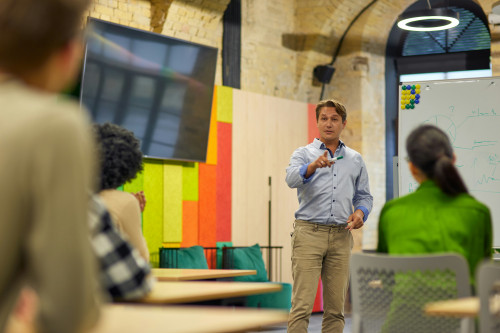



The Human Factor Remains Central
Although automation is often associated with the reduction of human labour, experience shows that people remain essential – just in different roles. Instead of performing routine tasks, workers are increasingly required to monitor, analyse, and optimise automated systems. This demands technical understanding as well as critical and ethical thinking.
For British companies, this means that investment in technology must go hand in hand with investment in skills. Without human insight, automation risks creating new kinds of errors – only at a higher level of complexity.
Ethical and Social Implications
The double impact of automation is not only technical but also social. As machines take over more functions, the labour market changes. Some jobs disappear while new ones emerge, and this transition can create insecurity and inequality if not managed responsibly.
Ethical questions also arise: Who is accountable when an algorithm makes a wrong decision? How can we ensure that automation does not lead to surveillance or discrimination? These issues require clear regulation and an ongoing public debate about the role of technology in society.
Balancing Control and Trust
Perhaps the greatest challenge in the age of automation is finding the right balance between control and trust. Too little control can lead to errors and misuse; too much can stifle innovation. The future of automation in the UK will depend not only on developing smarter machines but also on fostering smarter collaboration between humans and technology.
Used wisely, automation can make our workplaces safer and more efficient. But to achieve that, we must recognise its double nature – as both a source of security and a source of new risks.
Læs også: