Reflection as a Learning Tool: How to Anchor New Knowledge


Reflection as a Learning Tool: How to Anchor New Knowledge
Learning something new is not just about absorbing information – it’s equally about understanding, applying, and remembering it. This is where reflection plays a crucial role. When we pause to think about what we’ve learned and how we can use it, knowledge becomes anchored at a deeper level. In other words, reflection is the bridge between experience and insight.
In this article, we’ll explore how you can use reflection as an active learning tool – whether you’re studying, working, or simply navigating everyday life.
Why Reflection Strengthens Learning
Reflection helps us connect theory with practice. When you think about what you did and why you did it, you become more aware of your choices and their outcomes. This awareness makes it easier to repeat what works – and adjust what doesn’t.
Research in education and cognitive psychology shows that people who regularly reflect on their experiences learn faster and retain information better. That’s because reflection engages both the analytical and emotional parts of the brain. You’re not just processing facts, but also your reactions, feelings, and judgements.
In short: reflection makes learning personal – and therefore more lasting.
Making Reflection a Habit
Reflection doesn’t require much time, but it does require intention. It’s about creating small pauses in your day to ask yourself: What have I actually learned today?
Here are a few simple ways to make reflection a natural part of your routine:
- Keep a short learning journal – Write a few lines about what you’ve learned and how you might apply it.
- Talk with a colleague or fellow student – Conversations can help you see things from new perspectives.
- Do a weekly review – Spend ten minutes on a Friday afternoon thinking about what went well and what you’d like to improve next week.
- Use reflection questions – For example: What surprised me? What was challenging? What will I try next time?
When reflection becomes a habit, learning becomes a continuous process – not something that only happens in classrooms or training sessions.
Reflection in Practice – From Thought to Action
Reflection is most effective when it leads to action. It’s not just about thinking, but about turning thoughts into concrete steps.
A useful tool is the reflection cycle, which consists of four stages:
- Experience – What happened?
- Reflection – What did I think and feel?
- Analysis – What can I learn from this?
- Action – What will I do differently next time?
This method is widely used in education, healthcare, and professional development because it helps create a direct link between experience and improvement.
By working systematically with reflection, you become better at identifying patterns in your behaviour and developing new strategies for learning and problem-solving.
Reflecting Together
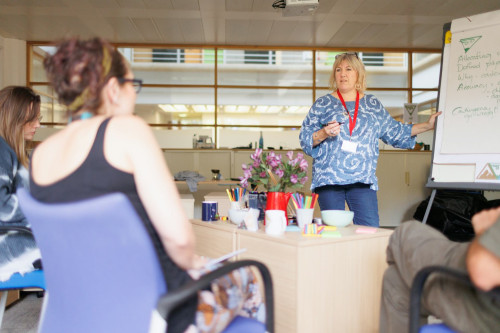
Although reflection is often seen as a personal activity, it can be just as valuable when done collectively. In study groups, team meetings, or professional learning communities, shared reflection can generate new insights by bringing different perspectives into play.
A good way to structure group reflection is to let everyone answer the same questions:
- What worked well?
- What could we have done differently?
- What will we take forward next time?
When reflection is shared, learning becomes a collective process where everyone contributes to the growth of both the group and the individual.
Creating Space for Thought
In a busy world, reflection can easily be pushed aside. Yet in an age of constant information and high speed, it’s more important than ever to create space for thought.
It can be as simple as taking a short pause after a meeting, a lecture, or a task and asking yourself: What did I just learn?
Reflection doesn’t require long periods of solitude – just a moment of awareness. Over time, these small moments can make a big difference in how you learn, work, and develop.
Læs også:



From Knowledge to Wisdom
To reflect is to give yourself time to understand. It’s the point where knowledge turns into insight – and insight into action.
When you make reflection a natural part of your learning, you don’t just remember more of what you’ve learned. You also become better at using it – and at growing as a person and professional.
Reflection isn’t an extra layer on top of learning. It is the heart of learning itself.
Læs også: